The Death of Politics

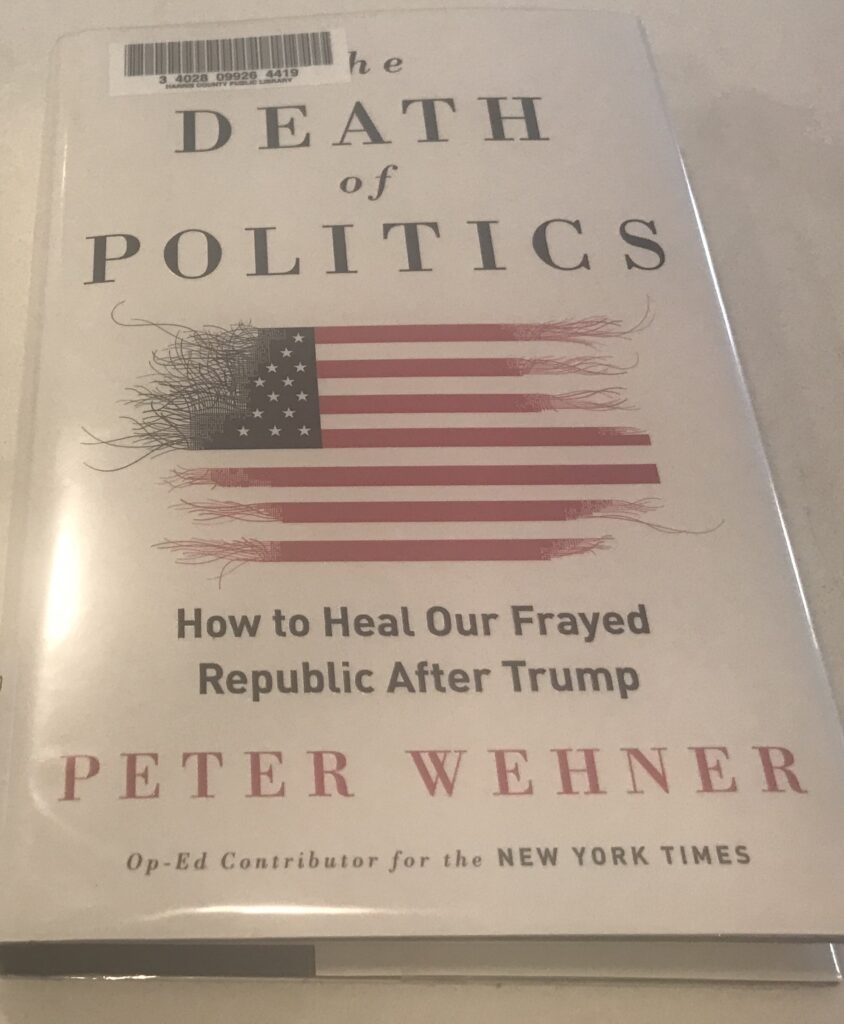
The Death of Politics, by Peter Wehner

In The Death of Politics, Peter Wehner argues that our uniquely American political tradition is dying, and that the death of that tradition is having and will have terrible consequences for our country. Wehner worked in three different Republican administrations, spending three decades in the highest levels of government. Ultimately, he spent seven years in the George W. Bush White House as deputy director of speechwriting and then as Director of the Office of Strategic Initiatives (which was basically an in-house think tank). He also worked on the staff of two presidential campaigns – George W.’s re-election campaign and Romney’s 2012 campaign. So, it would not be an overstatement to say that he spent the vast majority of his working life as a committed Republican.

Wehner begins by analyzing “how we ended up in this mess.” He believes that Trump is unfit to be President, and in fact is “precisely the kind of person our system of government was designed to avoid, the type of demagogic leader our founders feared.” If that’s the case, how did we get here? He argues that Trump’s election is the result of a toxic combination of a contempt for politics and politicians, along with demographic disruptions, economic anxieties, and political polarization.

After analyzing how we got to the current state of our political discourse, he provides detailed suggestions for ways that we might move forward toward healing. He argues that we need to restore the idea that politics is a serious craft, deserving of respect and also of candidates who are worthy of that respect. He thinks faith, civics, moderation, compromise, and civility should be modeled by each individual in their own communities, in an attempt to raise the level of our public conversation and move the culture to a more positive place. He explains:

“The task of citizenship in America today is not simply to curse the political darkness but to light candles. This can be done one person at a time, in your neighborhood and city, at a homeless shelter and a school board meeting, at neighborhood gatherings and city councils, and in countless other settings.”

The Death of Politics stands as a reminder, and maybe a harbinger, that the “qualities that the most active and engaged Americans demand in politicians is what they will get. If enough citizens lend their hands and hearts, their voices and votes to men and women who embody, even imperfectly, intellectual rigor and wise judgment, mastery of government and moral integrity, our politics will be transformed. But we have to care enough to act. We can’t be a nation of onlookers.”

Wehner believes that the problems we currently face as a nation are not beyond our capacity to repair, but that in order to do so we must “recover a sense of the importance of politics, a respect for the craft of governing and the value of competence and excellence.”

I grabbed this book at the library but soon after starting it I wished I had bought it instead, because I found that I wanted to underline something on almost every page. I will probably buy a copy and re-read it with a highlighter handy. This book really spoke to me on an emotional level — not only because I can indentify with Wehner ideologically, but also because I have become so discouraged about the state of our politics that I sometimes wonder if I’m actually teetering on the verge of clinical depression. This book provided a necessary spark of hope for me, as well as an important reminder about the critical importance of our political traditions. Maybe it can do that for you, too.

I highly recommend this thoughtful book. Let’s light some candles!
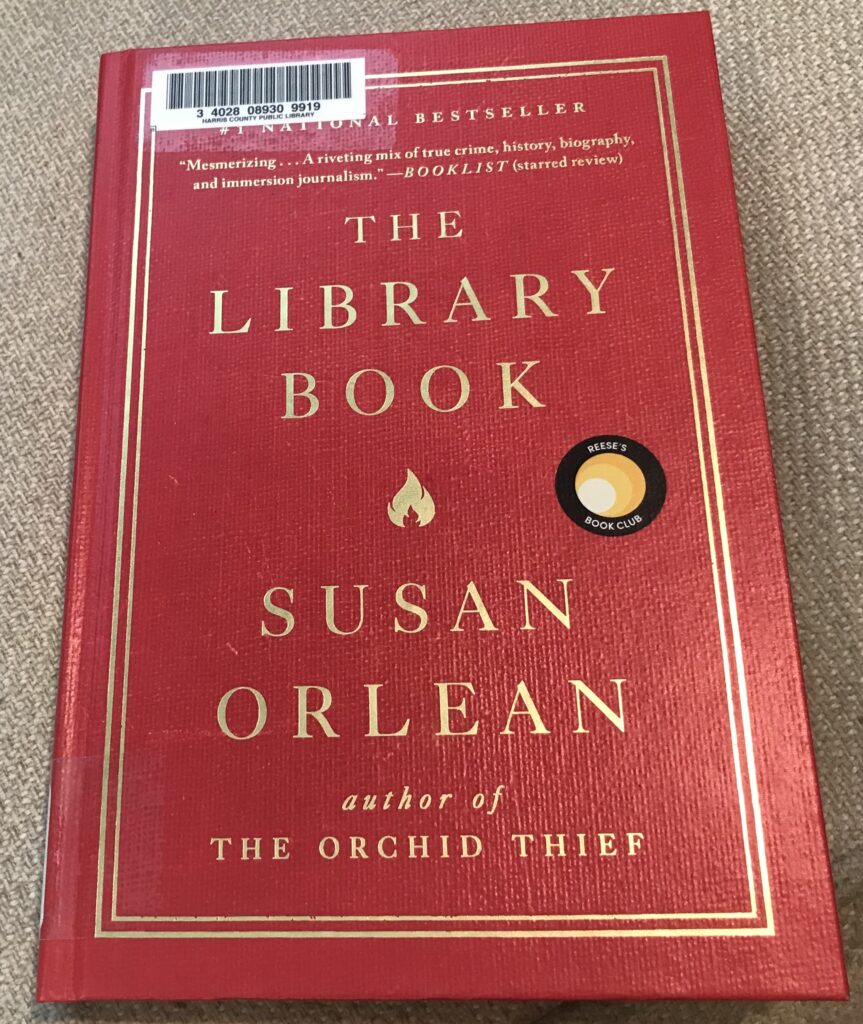
The Library Book

The Library Book, by Susan Orlean

In 1986, the Los Angeles Central Public Library caught fire. The fire grew and raged for over seven hours, ultimately destroying four hundred thousand books and damaging hundreds of thousands more. The Library Book tells the story of the fire, the attempt to find the cause of the fire, and the investigation of the man believed to have been the arsonist. Amidst this central story, Orlean weaves in the history of the Los Angeles library system, a history of libraries in general, the future of libraries, and a multitude of fascinating characters and facts.

I was captivated by this book. From the first page, I was utterly hooked — and that’s a rare feat for non-fiction. Granted, I am a huge library nerd (one of my favorite things about studying at Yale Law School was the fact that the library was open 24 hours a day), and a huge book nerd, so this book was right up my alley. I feel like I learned so much, and at the same time, it was a great reminder of just how important libraries always have been and continue to be in our communities.

I’m happy to also point out that I checked this book out from the library! I try to use the library as much as I can, and when I do buy books, at the end of the year I donate the majority of them to the local library to sell for fundraising. (It’s hard for me to let go of any books, but I can’t keep them all, or we’d be in a serious hoarding situation around here.)

This is one of my favorite books so far this year. Highly recommend!

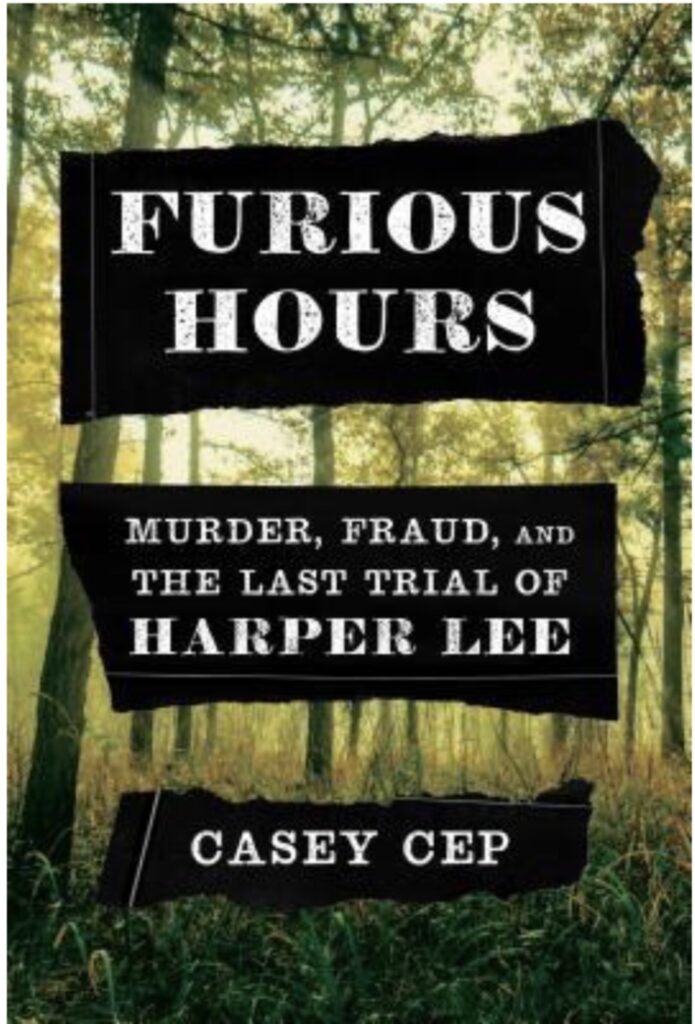
Furious Hours

I found this book profoundly frustrating. The parts of it that interested me — like the Maxwell murders — weren’t explored enough, and the parts that seemed extraneous — like Tom Radney’s life story, or the history of insurance — were explored too much. As a result, some of it held my interest and much of it did not.

I’m glad I read it, and I learned a lot about Harper Lee and Truman Capote that I didn’t know before, but overall I didn’t feel like this lived up to the hype.

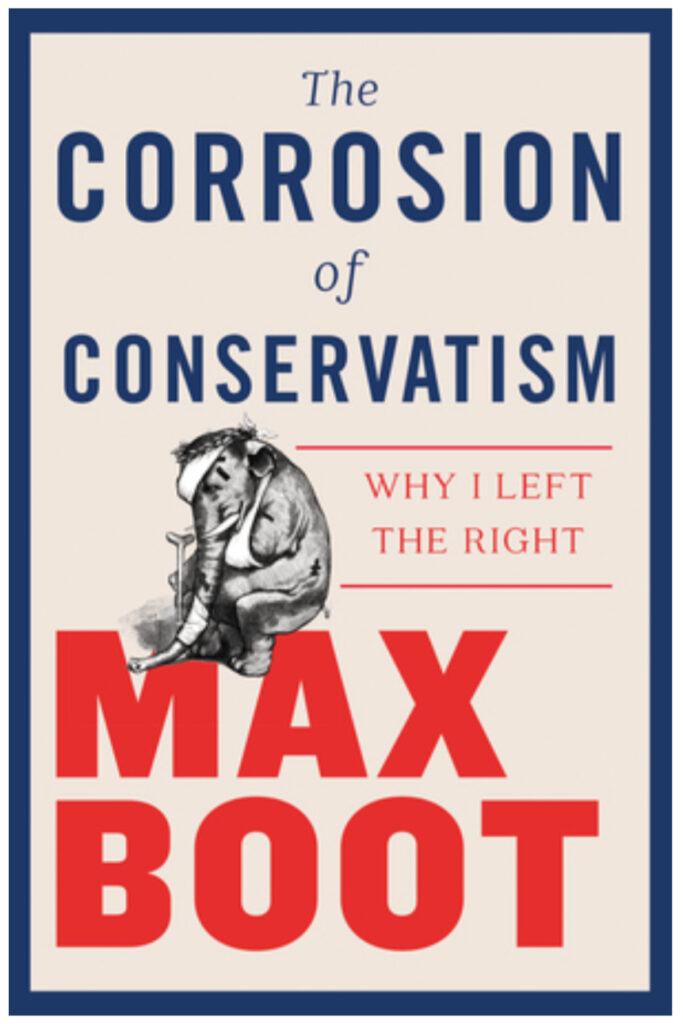
The Corrosion of Conservatism

I, like Max Boot, find myself “politically homeless,” so this book really spoke to me and in many ways echoed my own political journey. Boot is an excellent writer and historian, and this is an enjoyable read, though anyone who closely follows the news may find some of his detailed descriptions of recent events a bit tedious. Lots of food for thought here, especially for those who are disillusioned with the current Republican party.

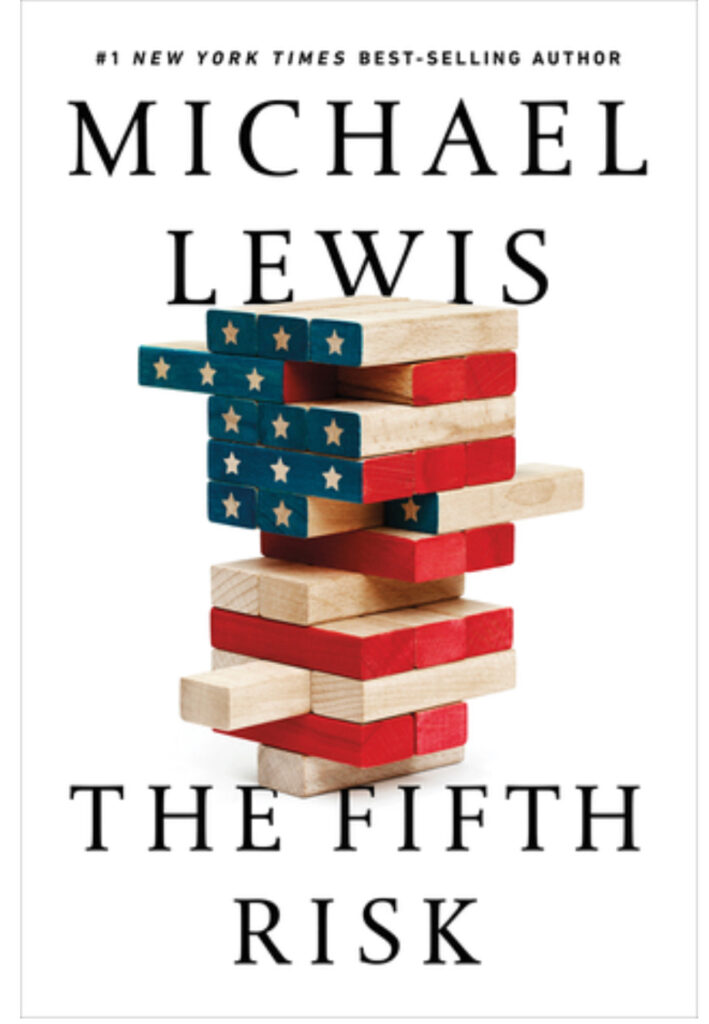
The Fifth Risk

The Fifth Risk, by Michael Lewis

Warning: long read!! So, more and more I find myself realizing just how LITTLE I know and how much there is to learn. Maybe it’s a consequence of aging (like watching more and more PBS?) but anyway, it happens to me a lot, but especially when I was reading The Fifth Risk. I was blown away by how little I knew about crucial government agencies and how they affect our lives. (H/T to Jolynn Dellinger – her review of this book on Goodreads is what motivated me to read it.)

I am recommending this book to you because more than ever I think we all need to be aware of and appreciate the role that our government plays in so many aspects of our lives. Before I go further I will admit that I generally think of myself as a “small government” kind of gal, and someone who is outraged by government waste and excess. Having said that, reading this book gave me a new appreciation for the essential importance of many of the functions of our admittedly massive bureaucracy and of the career professionals at these agencies who are committed to public service.

Lewis has written many great books that I’m sure you’ve heard of, including Moneyball, The Big Short, and The Blind Side. Similarly, this book is wonderfully written and very engaging, even though it focuses mainly on the Trump transition, and on the organization and function of three government agencies: the Departments of Energy, Commerce, and Agriculture.

I had no idea how many important things are handled by the Department of Energy: maintaining and guarding our nuclear arsenal, including tracking and securing plutonium and uranium at loose in the world; training every international atomic-energy inspector; supplying radiation-detection equipment to enable other countries to detect bomb materials; conducting science on nuclear material (a science budget in the billions!), and managing disposal/containment of massive amounts of nuclear waste. So, these are big – some might say, existential – matters. Given that, you might be alarmed at the way Lewis describes the transition of this department. Basically, the department prepared for a year before the election to transition the department in the same way that Bush did for Obama. Let that sink in for a moment – the activities/responsibilities of the DOE are so vast, so varied, and so complex that the employees spent a YEAR preparing the transition materials for their department. Then the election happened, and the DOE was ready the very next day for people from the Trump team to arrive and begin learning. No one came. A month went by. A MONTH. No one came. Then one guy – Thomas Pyle, President of the American Energy Alliance – arrived for a meeting with the outgoing Energy Secretary (Ernest Moniz, a nuclear physicist). He spent ONE HOUR at the agency, took no notes, asked no questions, and seemed disinterested. He left, and never returned. Eventually, Rick Perry was nominated to be Secretary of Energy. Yes, that Rick Perry, who had famously opined that the Department of Energy should be eliminated. (I’ll give Perry the benefit of the doubt and assume that, like me, he had no idea what the DOE really does, and that now that he does know, he’s committed to the mission….). Along with Rick Perry, Trump’s appointments to positions at DOE included many personal associates of his who had absolutely no background in science. In fact, several lacked college degrees, which made them ineligible for the high level government positions to which they’d been appointed.

The story is the same, and equally distressing, for the Departments of Agriculture and Commerce (did you know that the National Oceanic and Atmospheric Administration, NOAA, which oversees the National Weather Service, is a part of the Department of Commerce? Bet you didn’t!). I won’t go into detail here because this is already too long – but I urge you to read the book. I think the bottom line is that the government is engaged in myriad functions that are critical to our daily lives. Most of that work is performed by dedicated civil servants – career professionals – and many of them are highly credentialed scientists. Right now, many of those same professionals are working without a paycheck. We need to value this work and protect it, but we need competent management in order to do that – indeed, that is the “Fifth Risk”: project management.

I wish I had something encouraging to say to wrap this up, but I don’t. I’ve actually had trouble sleeping since I finished this book, but still, I urge you to read it. At this incredibly fraught time in our history, I think we would all be wise to know more about our government, to appreciate the complexities inherent in it, and to require expertise (or even just basic competence?) in those who aspire to lead us.