Simon the Fiddler

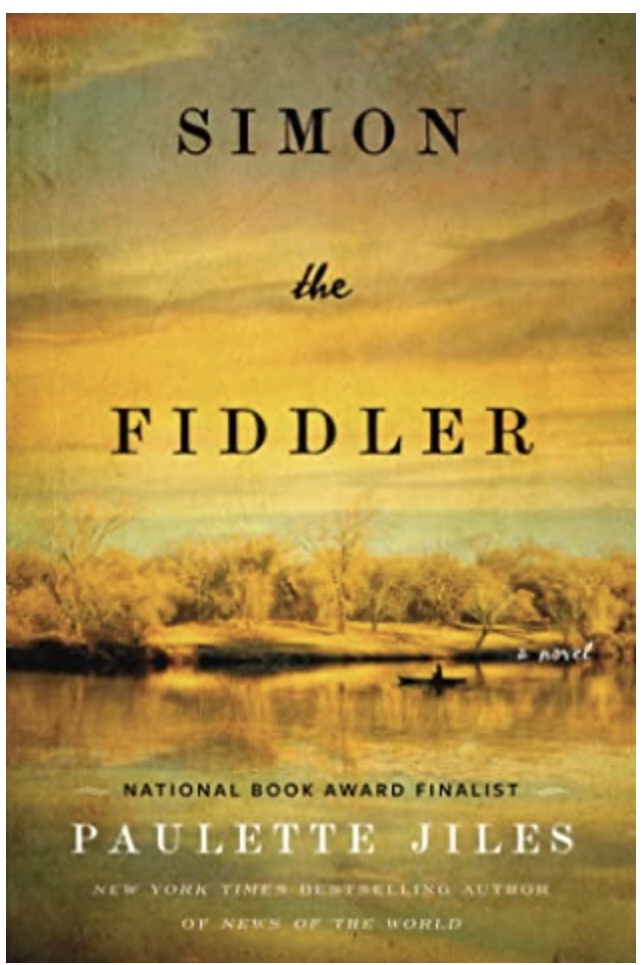
Simon the Fiddler, by Paulette Jiles

Paulette Jiles is the author of one of my all-time favorite books, News of the World, so  I have been counting the days until her next novel became available.  In Simon the Fiddler, Jiles returns to post-Civil War Texas, as a young musician joins with other war-weary veterans to eek out survival, all while he tries to reunite with the young woman he loves.

The set-up for the novel is intriguing, and I personally enjoyed the glimpses of Galveston, Houston and San Antonio in the late 1800s, which is rendered in gorgeous detail by Jiles.  Still, this novel just was not as good as News of the World — really not even close — so I found it disappointing.  The story of Simon and his friends’ struggles to come together as a band and to make enough money to survive drags on to a degree that I started to lose interest.  The love story that drives the novel is sweet, but also very, very hard to believe.  For some reason, I did not connect emotionally with any of the characters, so it was hard to stay invested in the story.

Jiles’ writing is as luminous as ever, so this novel is probably worth your time just for that reason.  There were parts of it that I loved (Captain Kidd makes an appearance!) and overall I’m glad that I read it.  Just know going in — especially if you loved News of the World — that you need to set your expectations lower.
The End of October

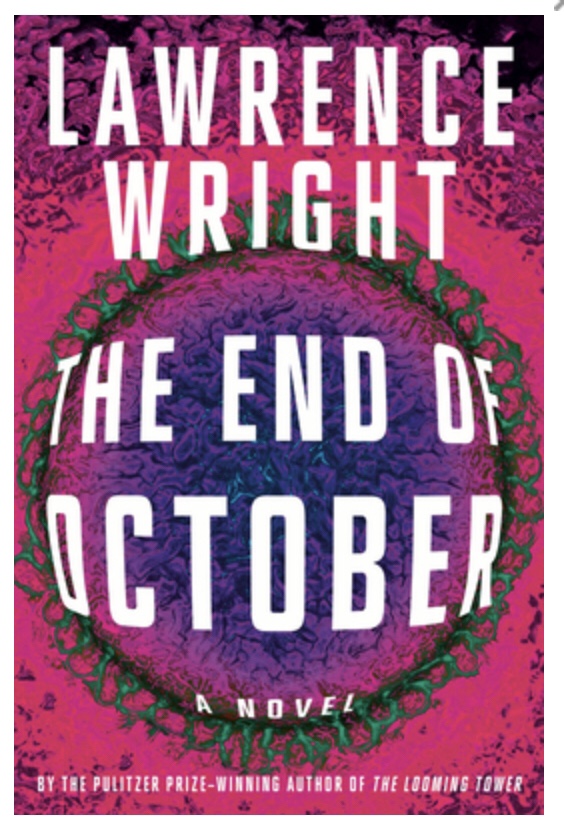
The End of October, by Lawrence Wright

As a pandemic sweeps the globe, CDC scientist Dr. Henry Parsons races to identify the virus and find a cure.  Lawrence Wright, writer of acclaimed non-fiction like The Looming Tower and Going Clear, takes on dystopian fiction in this incredibly prescient novel.  This was already on my “to-read” list before we found ourselves smack dab in the middle of our own pandemic; given Wright’s meticulous research  and attention to detail, I was anxious to read this and see how it differed from or was similar to our current situation.

Sadly, this novel is a mess.   A hot mess.  It starts well enough, as Parsons identifies the virus outbreak in a camp in Indonesia, and then travels to Saudi Arabia to try to contain the outbreak during the pilgrimage to Mecca.  Even though I had a few quibbles with the story at this point (as one of the world’s most preeminent virologists, Parsons makes some astonishing errors in judgment when he visits the Indonesian camp), I flew through the first third of the novel.

Then the wheels fell off.

I don’t want to be too specific so as to not spoil this novel for other readers, but suffice it to say: I think Wright needs to stick to non-fiction.  This novel was full of holes, lacked characterization, included entire chapters that had no bearing on the plot (Idaho?) and skipped around in maddening ways.  Marooning the main character in Saudi Arabia and then in a submarine — while the pandemic raged world-wide — was an incredibly odd choice.  

I could go on and on about the problems here, but I won’t.  This novel needed an editor and a substantial re-write.  Wright is incredibly talented, and much of this novel was eerily prescient, but ultimately this was a disappointment.  This would’ve been an acceptable first novel from an unknown author but I expect more from Wright.  Skip it.

Valentine

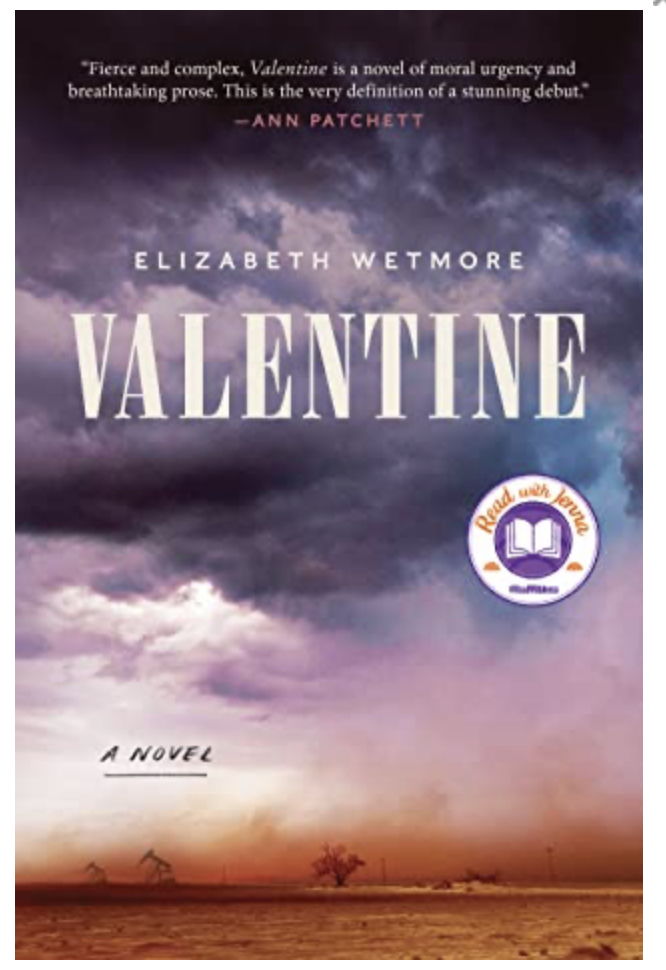
Valentine, by Elizabeth Wetmore

Valentine is an astonishing novel — even more so given that it is a debut.  Set in 1976 Odessa, Texas, the novel depicts the aftermath of the rape and beating of a young Mexican girl.  The story is told from the perspective of several different female characters, providing five distinct female voices.

I found the writing vivid and emotional, and I was drawn into the story immediately.   Wetmore grew up in West Texas and it shows — the setting was as spot-on as any I’ve ever read about that region. Just like the setting, the stories told in the novel are harsh and unrelenting.

The voices of the different female characters were diverse and interesting, with each being individual and valuable in its own way.  At first, I found the jumping around to different characters to be a bit distracting, but by the end it didn’t bother me anymore. I was completely captivated by each of the women in this story and anxious to see how their stories would end.

Something small that did bother me throughout the novel — no quotation marks.  What gives, people? Quotation marks serve a useful, important purpose.  When you fail to use them, you force the reader to slow down in order to figure out who the heck is speaking (or, if they are actually even speaking out loud at all). If this is a trend, I don’t like it.  It’s not cute or inventive.  It’s just annoying.

Valentine is an amazing debut novel — emotionally resonant and deeply satisfying.  Highly recommend.