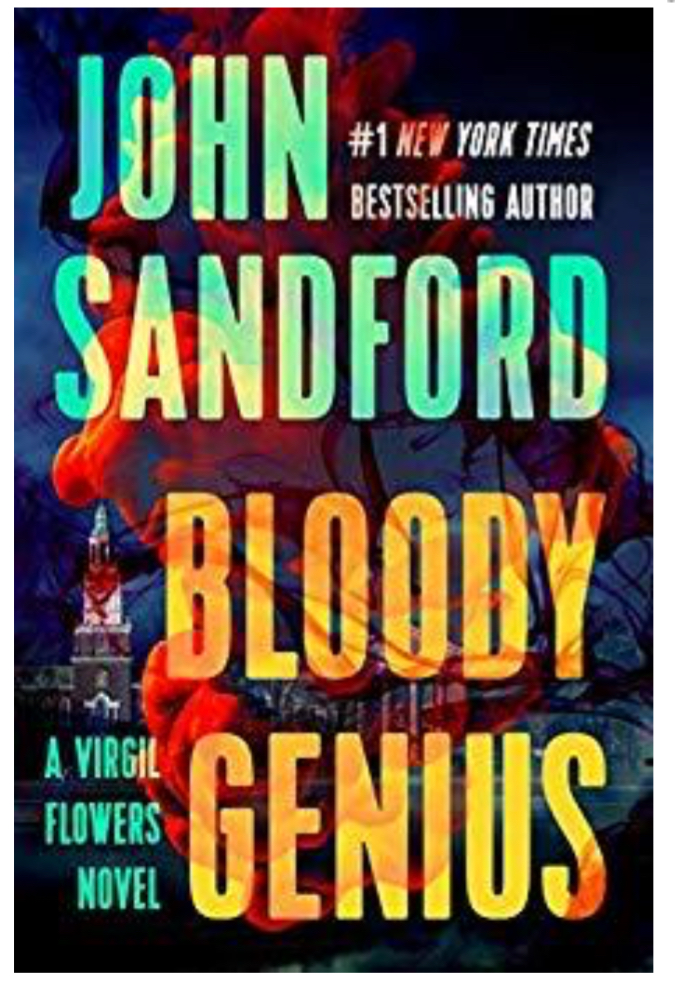
Bloody Genius

Bloody Genius, by John Sandford (Virgil Flowers #12)

Bloody Genius is the latest in this spin-off series from Sandford’s “Prey” series. The last Prey book was so bad that I’ve sworn off that series (we’ll see if that lasts). But this series, featuring police officer Virgil Flowers, is consistently good. Bloody Genius is actually one of my favorites in the series.

Flowers is a detective for the Minnesota Bureau of Criminal Apprehension. He has a penchant for vintage rock band t-shirts, would rather fish than work, and has a successful side-hustle as a nature writer/photo-journalist. So, he’s not your typical cop. He’s got a unique point of view, while being a good detective.

Most of these books are more crime thriller than mystery, but this book is an exception. It’s much more of a typical mystery (with a clever underlying theme, which I will not spoil for you here), and because of that, I think I liked it even more than the usual crime/thriller Flowers books.

This is easily read as a stand-alone, though you might enjoy it a bit more if you’ve read some of the previous Virgil Flowers books. It’s not a deep novel but it is fun. Perfect for a vacation or weekend read.
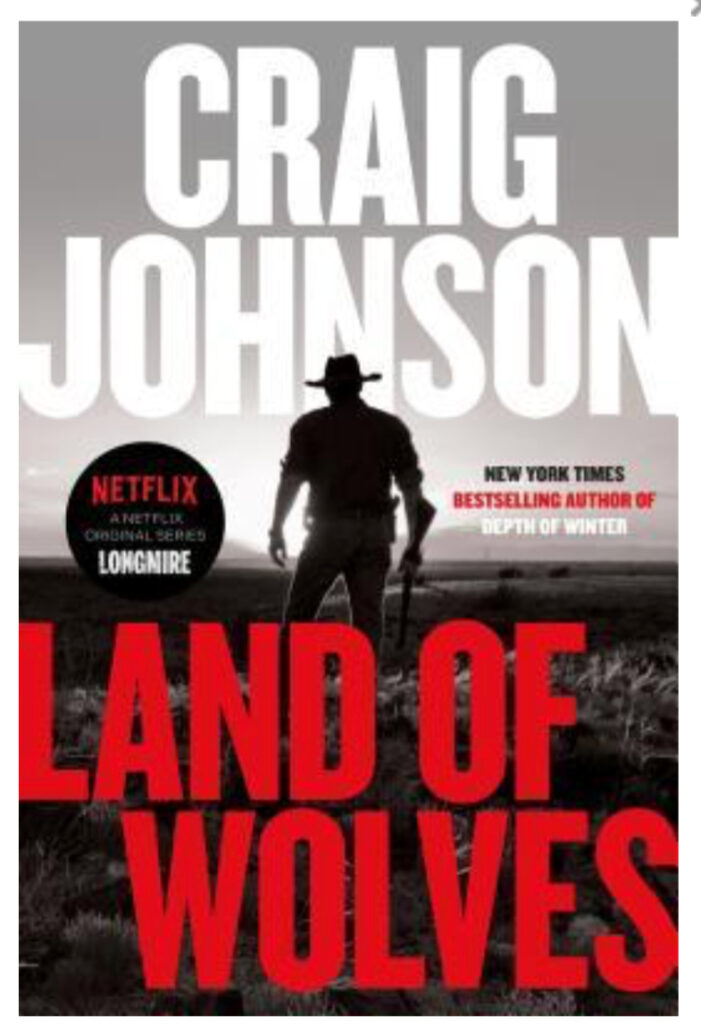
Land of Wolves

Land of Wolves, by Craig Johnson (Walt Longmire #15)

Johnson’s mystery series featuring Wyoming sheriff Walt Longmire is one of my very favorites (as is the really good TV series based on the books). That said, the last couple of books in this series fell short of my expectations, and as with most long-running series, it’s really hard to keep the series fresh and interesting as it ages. Happily, this book returned to form in very nice fashion: Longmire is back in Wyoming, surrounded by his usual cast of characters, solving a Wyoming-based mystery and coming to terms with his age and his uncertain future.

I enjoyed this book very much! Johnson is a talented writer, and almost every sentence in this novel is either funny, touching, or profound, without being fussy or overly wordy. I was so happy to fall back into the Longmire world for a few hours. I look forward to the next installment in this series, and I highly recommend it (this book in particular and also the series) for anyone who enjoys mysteries.

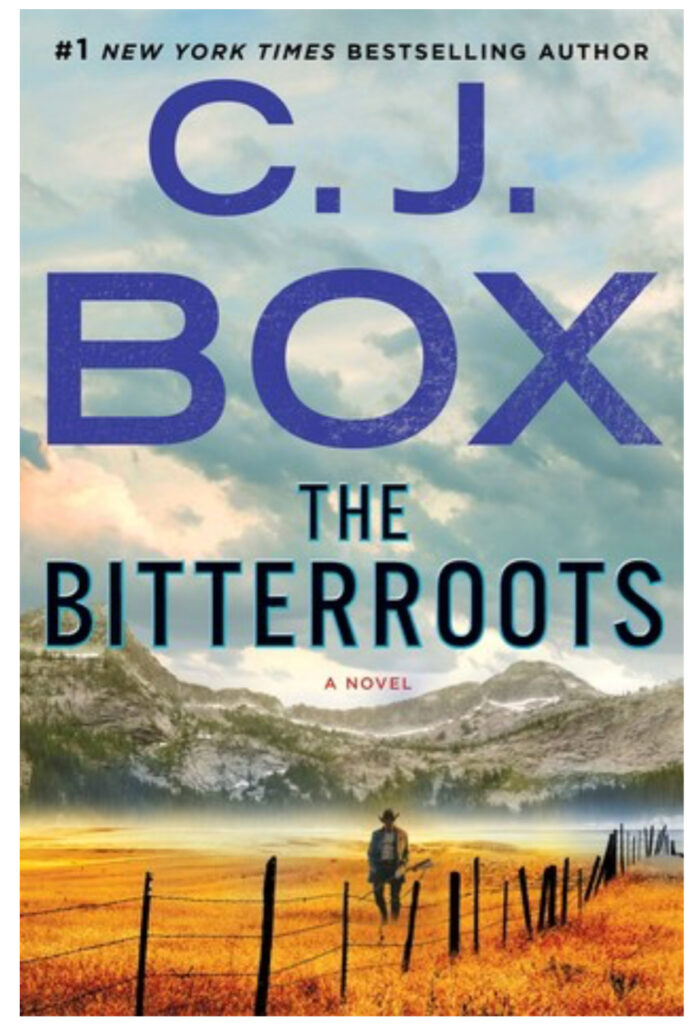
The Bitterroots

The Bitterroots, by C.J. Box (Cassie Dewell #4)

The Bitterroots is not an installment of Box’s long-running Joe Pickett series but rather features character Cassie Dewell, who has been in several of his previous novels. In general, I prefer the Joe Pickett series to this one, but these novels share the wonderful western Rockies setting and are enjoyable.

Here, Cassie has moved back to Montana to pursue a career as a private investigator, and in that capacity she is drawn into a dangerous, multi-generational family conflict related to a sprawling ranch in western Montana.

This book was okay. I loved the western Montana setting, and I appreciated the character of Cassie as a strong female lead. Still, while I’m sure it was unintentional and just bad timing, I found the plot and the characters of the Kleinsasser family in The Bitterroots so similar to the tv show Yellowstone (which, if you haven’t seen it, involves a Montana ranching family and all of their soap-opera-y business – plus the bonus of lots of Kevin Costner – love it!!) that it was distracting. Perhaps if I had not seen Yellowstone I would’ve enjoyed this book more. End the end, I wanted to like this book more than I actually did.

If you are in the market for a western-based mystery series, I think you’re better off with either Box’s Pickett series or Craig Johnson’s wonderful Longmire series (among others).

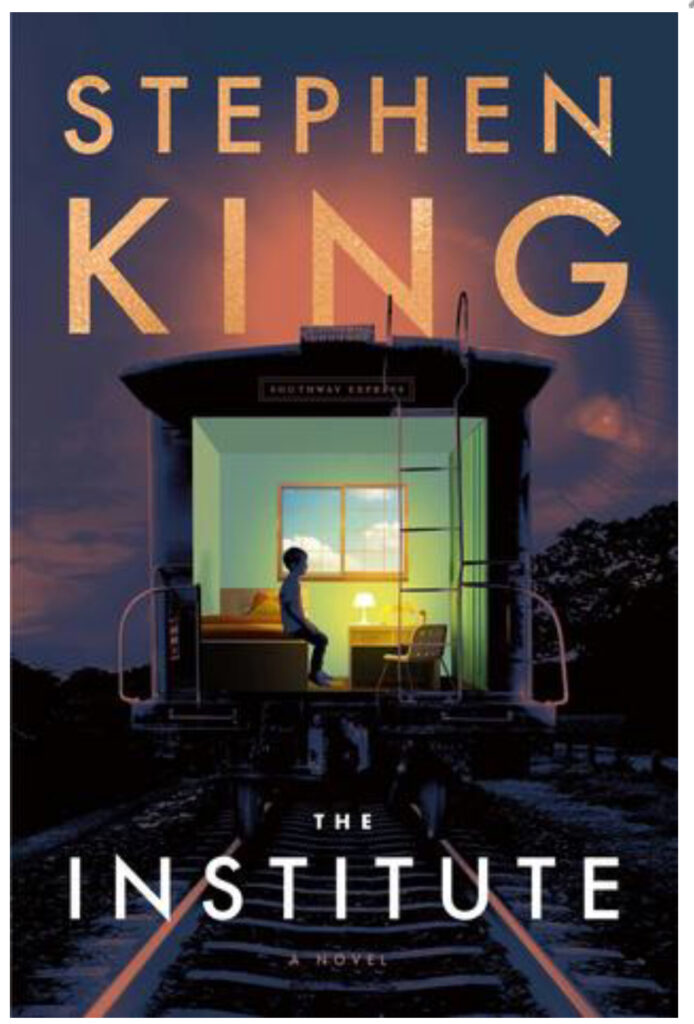
The Institute

The Institute, by Stephen King

In The Institute, child prodigy Luke Ellis — who also happens to be able to move objects with his mind — is kidnapped in the middle of the night and imprisoned, along with other similarly exceptional children, in a mysterious facility in rural Maine. Meanwhile, former police officer Tim Jamieson is drifting through the southeast, trying to figure out what to do with his life. Through happenstance and luck, their paths cross and Luke’s fate, as well as perhaps the fate of the world, hang in the balance.

This is the kind of Stephen King book that I fell in love with as a kid — it has an intriguing premise and many memorable characters, and unlike some of his other books, the gore factor is pretty low. The children play the starring roles in this novel and they are very believable. The Tim Jamieson character reminded me of Jack Reacher in some of the best of Lee Child’s Reacher novels.

Overall, I really enjoyed this book. My only complaint is that it was too long. I love a long book (indeed, after reading the original published version of The Stand, I happily read the unabridged version when it was released, and loved all 1153 pages of it), but The Institute, at almost 500 pages long, dragged at points. I was tempted to skim. I think the whole book could’ve been tightened up by about 100 pages. Still, the length and level of detail is how King draws you in and makes you feel like you really know the characters (and who am I to suggest edits to Stephen King?).

Highly recommend, especially for fans of Stephen King’s other kid-centered novels (It, The Talisman, etc.).