The Dog Stars

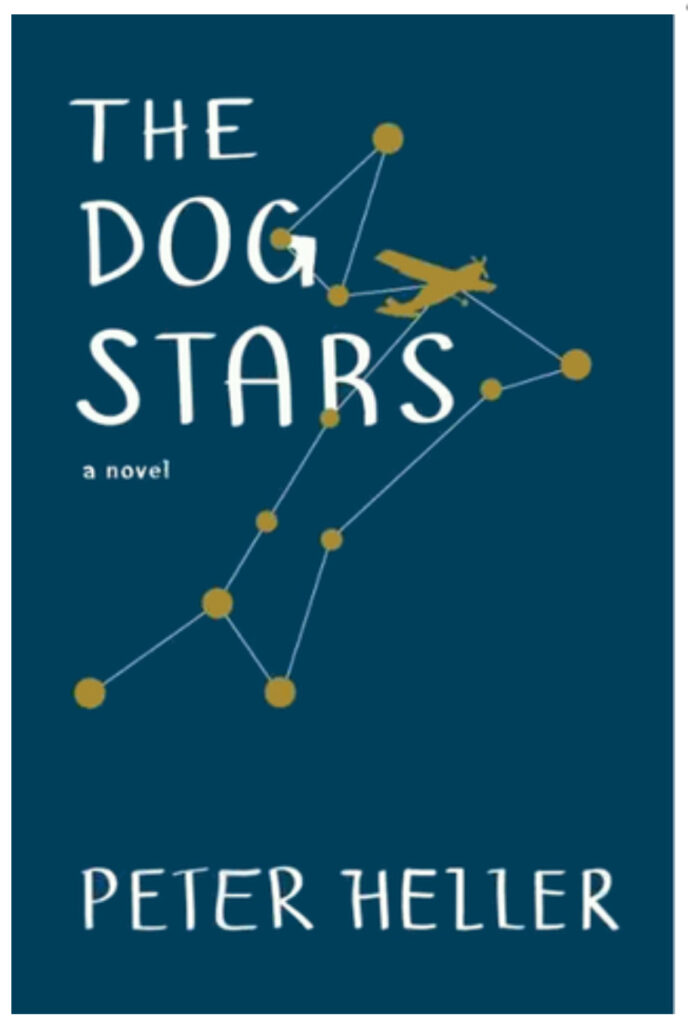
The Dog Stars, by Peter Heller

Who reads a novel about a deadly pandemic in the middle of a deadly pandemic? I do, I guess. I’m a big fan of dsytopian fiction, and also a big fan of Peter Heller’s most recent book, The River, so when I discovered that a few years back he’d written a dystopian novel, naturally I needed to read it.

The Dog Stars follows Hig, who has survived a flu pandemic that has killed most of the world’s population, including his wife and unborn child. He lives in an abandoned Colorado airfield with his dog and one other survivor, as they navigate the dangers of their new world. Hig deals with his grief and contemplates the value of living when so many have died.

I enjoyed this book a lot, though I found it uneven in parts. The stream of consciousness style of story-telling was not always easy to follow. Also, Heller does not use punctuation for dialogue — a choice that I find very annoying and unfortunately increasingly common — which sometimes confused me. It took me awhile to get into this novel, but I was much more engaged in the story by the last third of the book.

Recommended for fans of dystopian fiction and for fans of Peter Heller, who brings a literary approach to his novels regardless of the subject matter.
A Boy and his Dog at the End of the World

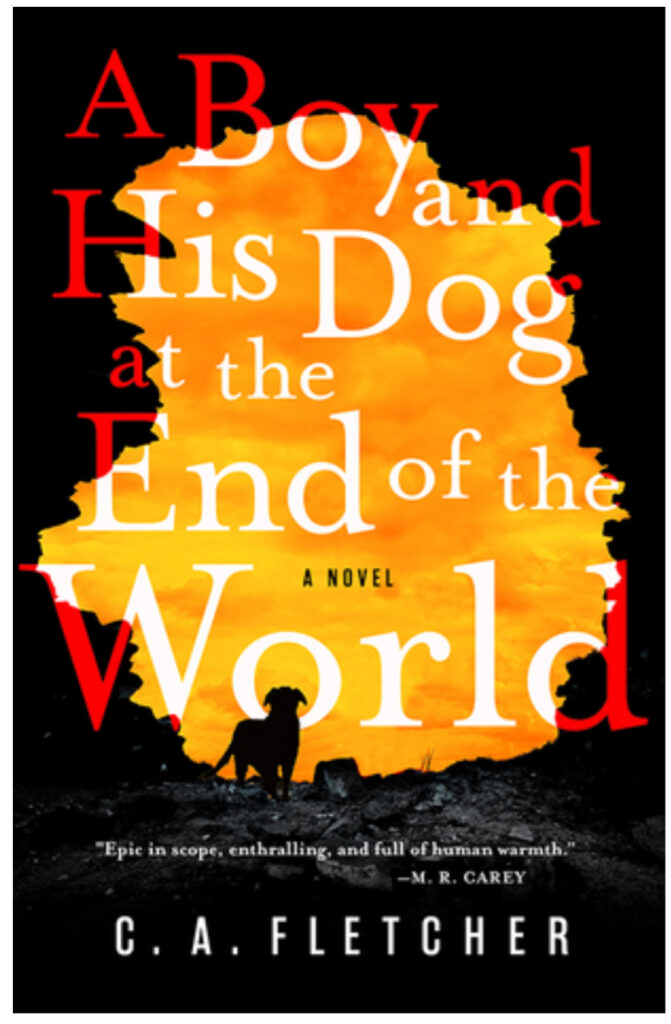
About one hundred years after the world as we know it comes to an end, Griz and his family survive in isolation on a remote Scottish island. When a stranger arrives and steals Griz’s dog, Griz impulsively goes after him, chasing the thief into the dangerous unknown.

I’m a big fan of dystopian fiction and so the set-up of this book appealed to me. Overall, I liked it a lot, though there were places in the middle of the book that seemed to drag. The story really picked up in the last quarter or so of the novel, though, and the ending was very well done. This book is not Station Eleven or The Stand, but with that said, I recommend it to people who are fans of this genre.

Earth Abides

I’m so excited today to bring you this guest review, from my friend and law school classmate Jonathan Zasloff. Jonathan is a professor at UCLA Law School, and a recently-ordained rabbi. As you’ll see, he is a wonderful writer and thoughtful reviewer. I hope I can feature his reviews often!

Earth Abides, by George Stewart

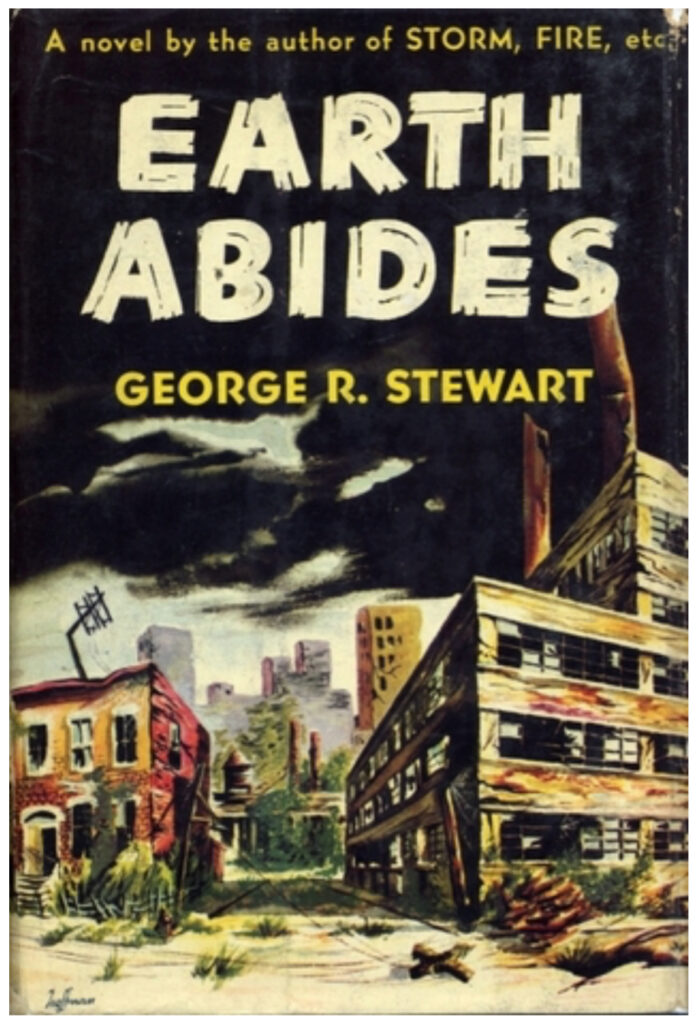
Post-apocalyptic literature seems to take on more relevance every day, and since 2016, I have become more and more of a connoisseur of the genre. Earth Abides, originally published in 1949, is something of the Ur-text of the genre.

Isherwood Williams, a geography grad student, discovers that virtually all of the world’s human population has been wiped out by a strange disease, and Earth Abides chronicles the rest of his life, the people he meets, and the community he helps form. What struck me the most about this book is its quietness — even with some awful problems, there are no other great disasters, just a gradual decay. Thus the title, from Ecclesiastes (1:4): “Generations come and go, but earth abides.”

I couldn’t help seeing the Jewish — or at least the Biblical — angle. Isherwood goes by his nickname, “Ish” — which just so happens to be the Hebrew word for “man.” His wife is “Emme,” which just so happens to be awfully close to the Hebrew word for “mother.” His best friend is named Ezra, which just happens to be the Hebrew word for “helper.” In the Bible, Ezra is a scribe, who through force of will recreates the Israelites’ religious civilization. This Ezra does not.

And is that bad? Is it a problem? Suppose civilization peters out. Should we mourn that?

It’s a question that, between the rise of fascism and the warming of the earth, we need to ask more urgently. If the answer is yes, what do we do? I got a little weepy seeing Ish board up the Bancroft Library in Berkeley, knowing that very soon no one will be able to read the precious volumes inside, yet doing it anyway. Later, the rust slowly corrodes the Bay Bridge.
Earth Abides has been in print continuously now for 70 years. It has, well, abided. I wonder whether, in seven more decades, it will lie in an abandoned library, with no one around to read it.

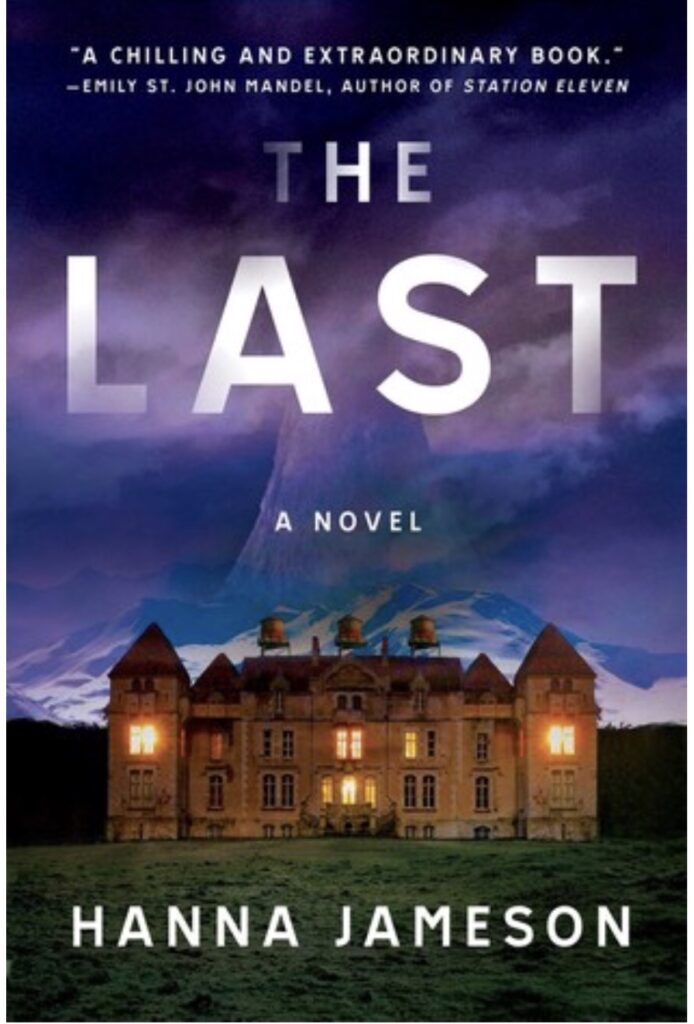
The Last

Disappointed in this one – good dystopian hook, unevenly executed. I had so looked forward to this book and was excited to get it from the library, especially since it was recommended by Emily St. John Mandel, who wrote one of my all-time favorites, Station Eleven. Sadly, it did not live up to that comparison.

The Last follows a group of people who are stranded at a hotel in the Swiss Alps following a nuclear war. Great hook! But it just didn’t work for me: at times I was bored, other times confused. I did not find the characters likable, and so I wasn’t really rooting for anyone. People spent a LOT of time zoned out doing drugs and just generally laying around – for a doomsday scenario, it didn’t make a lot of sense to me. And the ending – didn’t love it.

I feel like this could have been so much better. Pass.

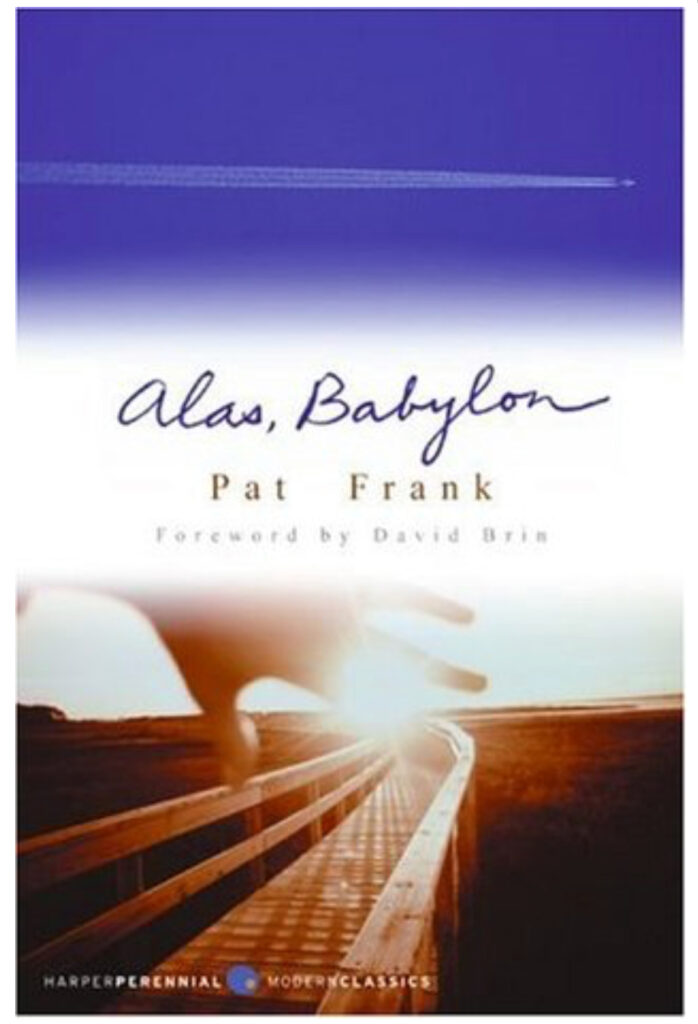
Alas, Babylon

This was one of my daughter’s choices for 10th grade summer reading. It sounded interesting and I was surprised that not only had I not read it, I hadn’t heard of it before.

Set in the late 1950’s when fears of a nuclear war with Russia were high, this novel follows the story of a handful of people in the small Florida town of Fort Repose as they try to survive in the aftermath of a nuclear war.

I’m always drawn to these post-apocalyptic novels because I’m fascinated by the details of how people would survive in these dystopian scenarios. Here, the details are interesting because even though this book was written over 50 years ago, before so many modern technological advances like cellphones, the basics of survival seem like they would be the same even today. I was interested in the story and the characters, and wanted to see how the book ended.

That said, I think the novel is limited by a few things: 1) while fitting with the time the novel was written, many of the characters are stuck in (now) outdated gender and race roles, which I found jarring. The racism and the language associated with that is pretty horrifying. The women in the story, while quite capable, are confined to cooking and sewing, and often utter diaglogue that – in context – just seems silly. A lot of “oh, darling!” and that sort of thing; 2) the character development is quite superficial and I think the novel could’ve been much more impactful if the feelings of the characters had been explored more; and 3) I felt that the novel underplayed the likely horrors of the aftermath of a nuclear war. In that respect, the travails of Fort Repose seem almost quaint.

Glad I read it, as it is a classic of the genre, but not sure I can enthusiastically recommend it. I’ll be interested to see what the 10th graders and their teacher have to say about it!

Wanderers

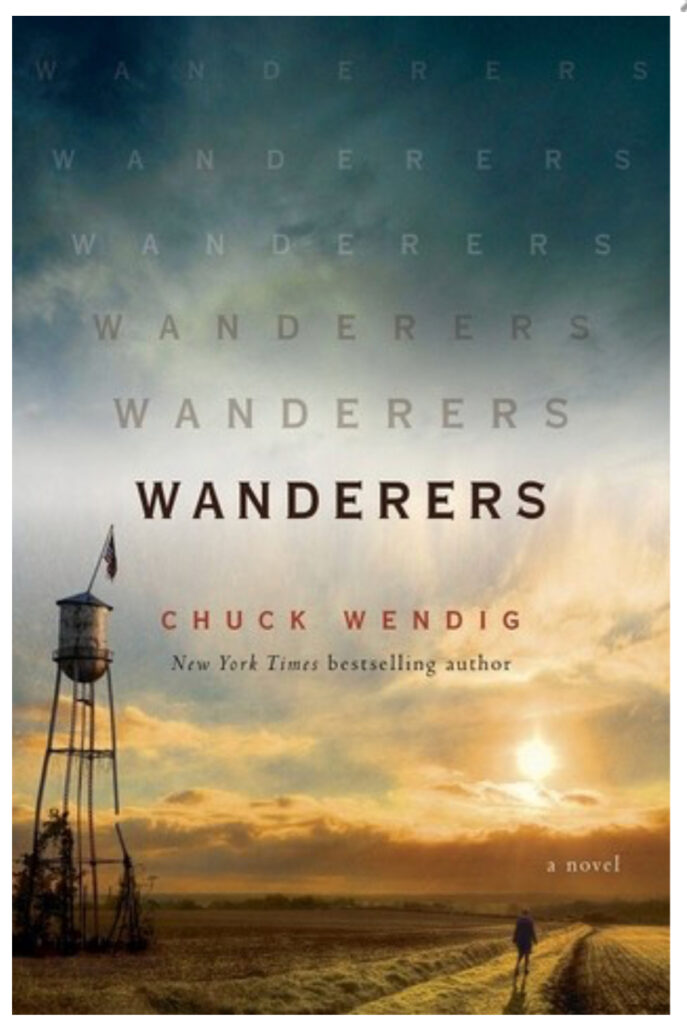
Wanderers, by Chuck Wendig

(Available July 2)

Thanks to Chuck Wendig, Random House Ballantine, and Netgalley for providing me with a digital advance copy of this novel. I am a big fan of well-written dystopian fiction — Station Eleven, The Stand, and The Passage are among my all-time favorite novels — so I had high hopes for Wanderers. Wendig has written a novel sweeping in scope (and massive in length – 800+ pages!), with engaging characters and a plot that seems all too possible. Terrifying yet heartwarming, this book was almost impossible to put down, and I was actually sad to see it come to an end (I might add that I didn’t love the ending). It did not have the lyrical hope of Station Eleven, nor the literary depth of The Passage, and nothing reaches the heights of The Stand, but if you are longing for a good story in this genre, give this one a try. Highly recommend.