Simon the Fiddler

Simon the Fiddler, by Paulette Jiles

Paulette Jiles is the author of one of my all-time favorite books, News of the World, so  I have been counting the days until her next novel became available.  In Simon the Fiddler, Jiles returns to post-Civil War Texas, as a young musician joins with other war-weary veterans to eek out survival, all while he tries to reunite with the young woman he loves.

The set-up for the novel is intriguing, and I personally enjoyed the glimpses of Galveston, Houston and San Antonio in the late 1800s, which is rendered in gorgeous detail by Jiles.  Still, this novel just was not as good as News of the World — really not even close — so I found it disappointing.  The story of Simon and his friends’ struggles to come together as a band and to make enough money to survive drags on to a degree that I started to lose interest.  The love story that drives the novel is sweet, but also very, very hard to believe.  For some reason, I did not connect emotionally with any of the characters, so it was hard to stay invested in the story.

Jiles’ writing is as luminous as ever, so this novel is probably worth your time just for that reason.  There were parts of it that I loved (Captain Kidd makes an appearance!) and overall I’m glad that I read it.  Just know going in — especially if you loved News of the World — that you need to set your expectations lower.
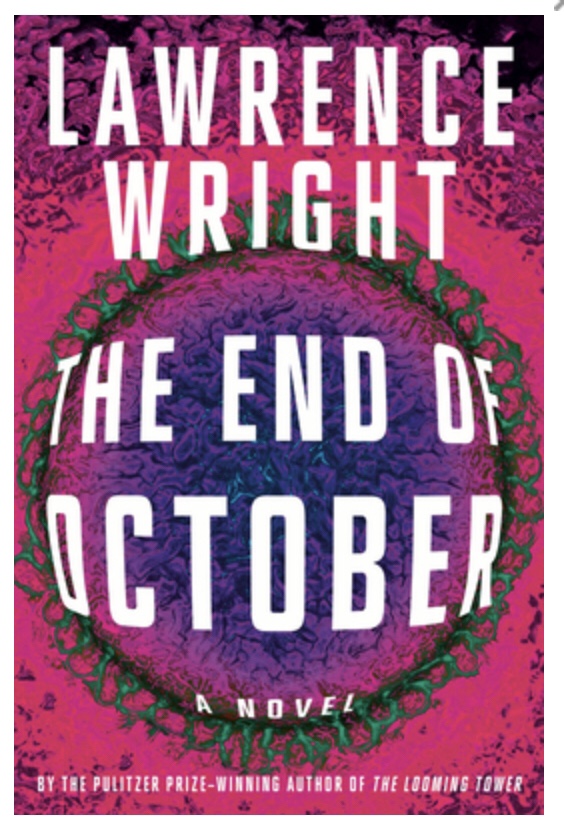
The End of October

The End of October, by Lawrence Wright

As a pandemic sweeps the globe, CDC scientist Dr. Henry Parsons races to identify the virus and find a cure.  Lawrence Wright, writer of acclaimed non-fiction like The Looming Tower and Going Clear, takes on dystopian fiction in this incredibly prescient novel.  This was already on my “to-read” list before we found ourselves smack dab in the middle of our own pandemic; given Wright’s meticulous research  and attention to detail, I was anxious to read this and see how it differed from or was similar to our current situation.

Sadly, this novel is a mess.   A hot mess.  It starts well enough, as Parsons identifies the virus outbreak in a camp in Indonesia, and then travels to Saudi Arabia to try to contain the outbreak during the pilgrimage to Mecca.  Even though I had a few quibbles with the story at this point (as one of the world’s most preeminent virologists, Parsons makes some astonishing errors in judgment when he visits the Indonesian camp), I flew through the first third of the novel.

Then the wheels fell off.

I don’t want to be too specific so as to not spoil this novel for other readers, but suffice it to say: I think Wright needs to stick to non-fiction.  This novel was full of holes, lacked characterization, included entire chapters that had no bearing on the plot (Idaho?) and skipped around in maddening ways.  Marooning the main character in Saudi Arabia and then in a submarine — while the pandemic raged world-wide — was an incredibly odd choice.  

I could go on and on about the problems here, but I won’t.  This novel needed an editor and a substantial re-write.  Wright is incredibly talented, and much of this novel was eerily prescient, but ultimately this was a disappointment.  This would’ve been an acceptable first novel from an unknown author but I expect more from Wright.  Skip it.

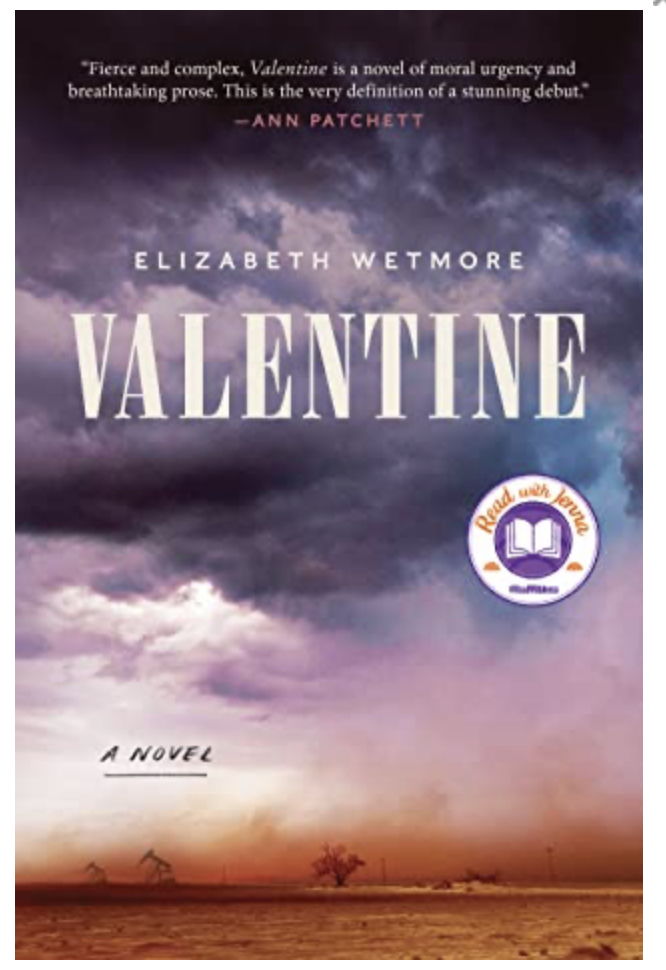
Valentine

Valentine, by Elizabeth Wetmore

Valentine is an astonishing novel — even more so given that it is a debut.  Set in 1976 Odessa, Texas, the novel depicts the aftermath of the rape and beating of a young Mexican girl.  The story is told from the perspective of several different female characters, providing five distinct female voices.

I found the writing vivid and emotional, and I was drawn into the story immediately.   Wetmore grew up in West Texas and it shows — the setting was as spot-on as any I’ve ever read about that region. Just like the setting, the stories told in the novel are harsh and unrelenting.

The voices of the different female characters were diverse and interesting, with each being individual and valuable in its own way.  At first, I found the jumping around to different characters to be a bit distracting, but by the end it didn’t bother me anymore. I was completely captivated by each of the women in this story and anxious to see how their stories would end.

Something small that did bother me throughout the novel — no quotation marks.  What gives, people? Quotation marks serve a useful, important purpose.  When you fail to use them, you force the reader to slow down in order to figure out who the heck is speaking (or, if they are actually even speaking out loud at all). If this is a trend, I don’t like it.  It’s not cute or inventive.  It’s just annoying.

Valentine is an amazing debut novel — emotionally resonant and deeply satisfying.  Highly recommend.    

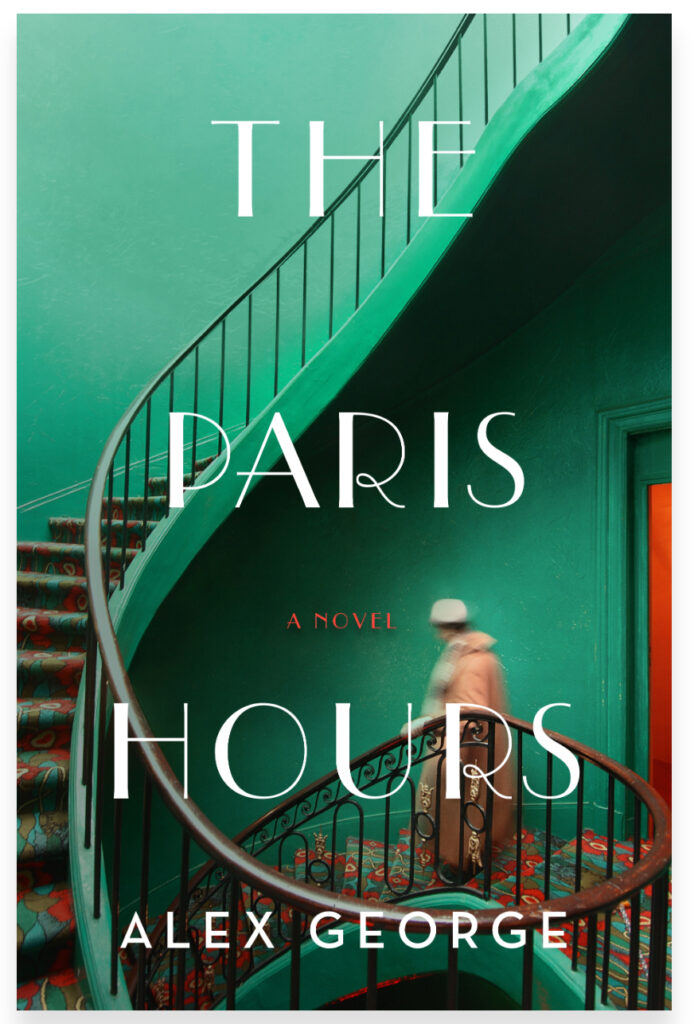
The Paris Hours

Set in 1927 Paris, The Paris Hours follows four different characters through one day: Souren, who is an Armenian refugee and puppeteer; Camille, a French country girl who becomes secretary to Marcel Proust; Guillaume, a struggling painter hounded by a loan shark; and Jean-Paul, a journalist and war veteran who is trapped in his own sad story. Their seemingly separate stories weave together in the end.

While this could be categorized as historical fiction, it is not at all genre historical fiction. Rather, it is more of a literary novel with a historical setting. (Think: A Gentleman in Moscow.) George’s previous novel, Setting Free the Kites, was exceptional (highly recommend!) and while this one is very different, the writing is just as luminous.

I did think the novel was uneven at points, and the ending — crowded with historical figures, like Hemingway and Josephine Baker — seemed a bit contrived, but overall I was spellbound by the writing and captivated by the well-drawn cast of characters. I highly recommend The Paris Hours, and I can’t wait for Alex George’s next novel.

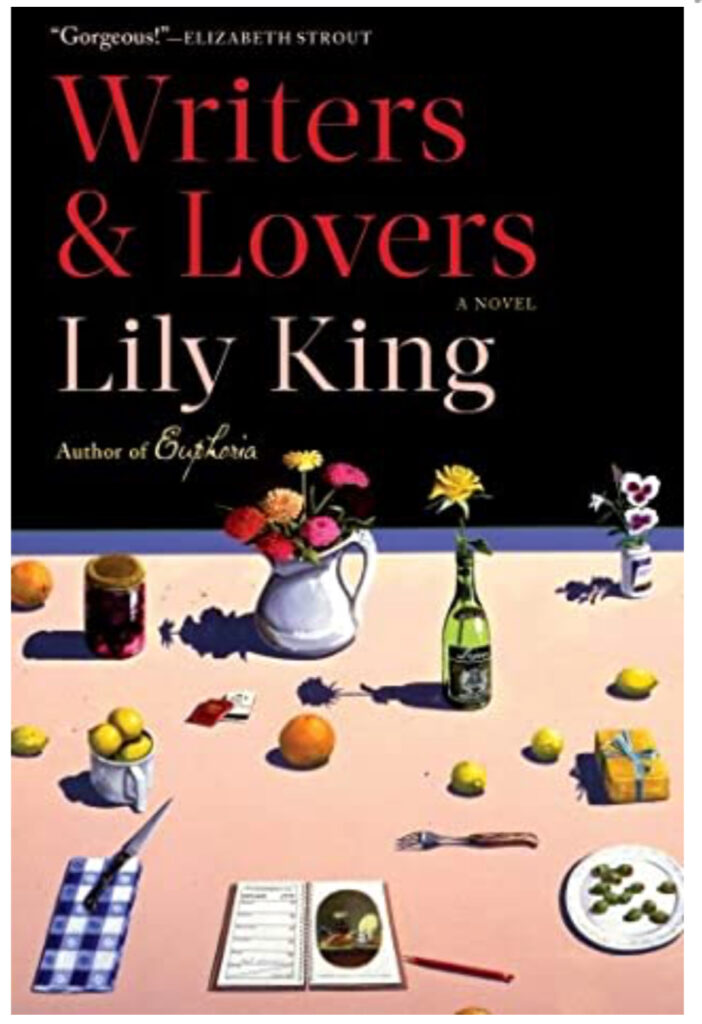
Writers & Lovers

Writers & Lovers, by Lily King

I loved Lily King’s previous novel, Euphoria, so I was excited to read Writers & Lovers. Sadly, it didn’t live up to my (admittedly sky high) expectations.

The novel centers around Casey, a young woman who’s dealing with the sudden death of her mother and crushing financial problems, all while trying to finish her first novel (that she’s been working on for six years).

While I was interested enough in this novel to finish it, I didn’t love it, and at times I was annoyed by it. I think the main problem for me was that I didn’t much like the main character. Although Casey was grieving the loss of her mother, and did have other stressors in her life, she seemed incredibly self-involved. Her random panic attacks just did not make sense to me. I also did not understand why every man she came in contact with IMMEDIATELY wanted to date her. Honestly, the “lovers” part of the novel smacked of YA to me (Insta-love!).

Also, some of the descriptions in this novel were so weird (“he tasted like Europe” and “my heart felt like a mealy apple” as just two examples) that I would pause while reading and think, not, “Wow, what an interesting way to describe that,” but instead, “Wait, what now?” This happened multiple times, and became a recurring distraction. I don’t know if King was trying too hard to be “literary,” or what, but it fell flat for me.

So, all in all, I give this one a “meh.” It was fine, I just expected it to be exceptional.

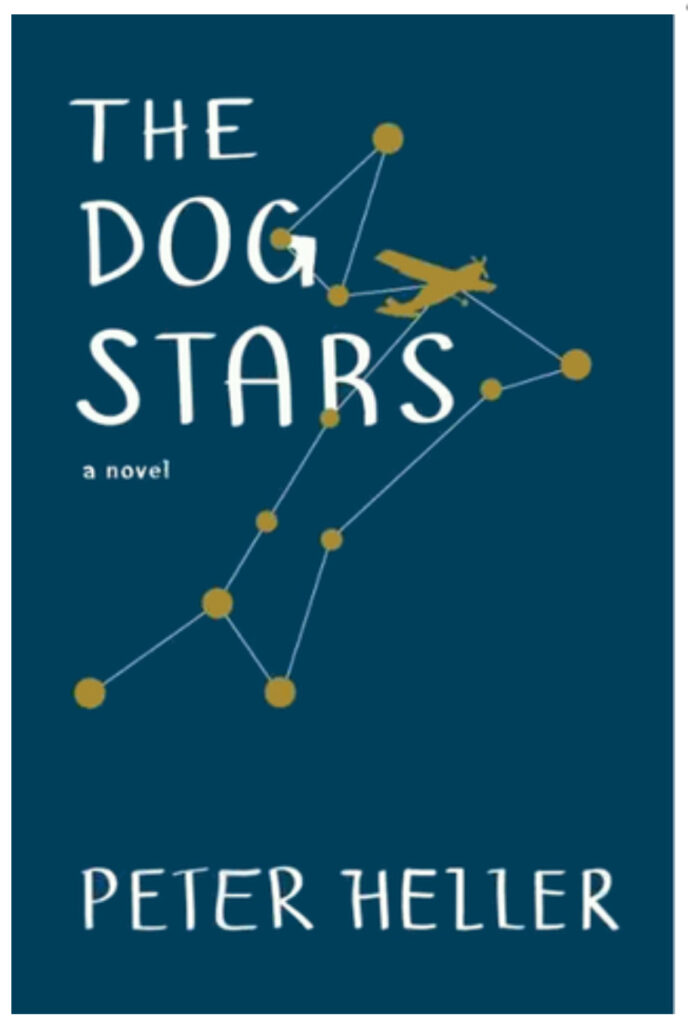
The Dog Stars

The Dog Stars, by Peter Heller

Who reads a novel about a deadly pandemic in the middle of a deadly pandemic? I do, I guess. I’m a big fan of dsytopian fiction, and also a big fan of Peter Heller’s most recent book, The River, so when I discovered that a few years back he’d written a dystopian novel, naturally I needed to read it.

The Dog Stars follows Hig, who has survived a flu pandemic that has killed most of the world’s population, including his wife and unborn child. He lives in an abandoned Colorado airfield with his dog and one other survivor, as they navigate the dangers of their new world. Hig deals with his grief and contemplates the value of living when so many have died.

I enjoyed this book a lot, though I found it uneven in parts. The stream of consciousness style of story-telling was not always easy to follow. Also, Heller does not use punctuation for dialogue — a choice that I find very annoying and unfortunately increasingly common — which sometimes confused me. It took me awhile to get into this novel, but I was much more engaged in the story by the last third of the book.

Recommended for fans of dystopian fiction and for fans of Peter Heller, who brings a literary approach to his novels regardless of the subject matter.

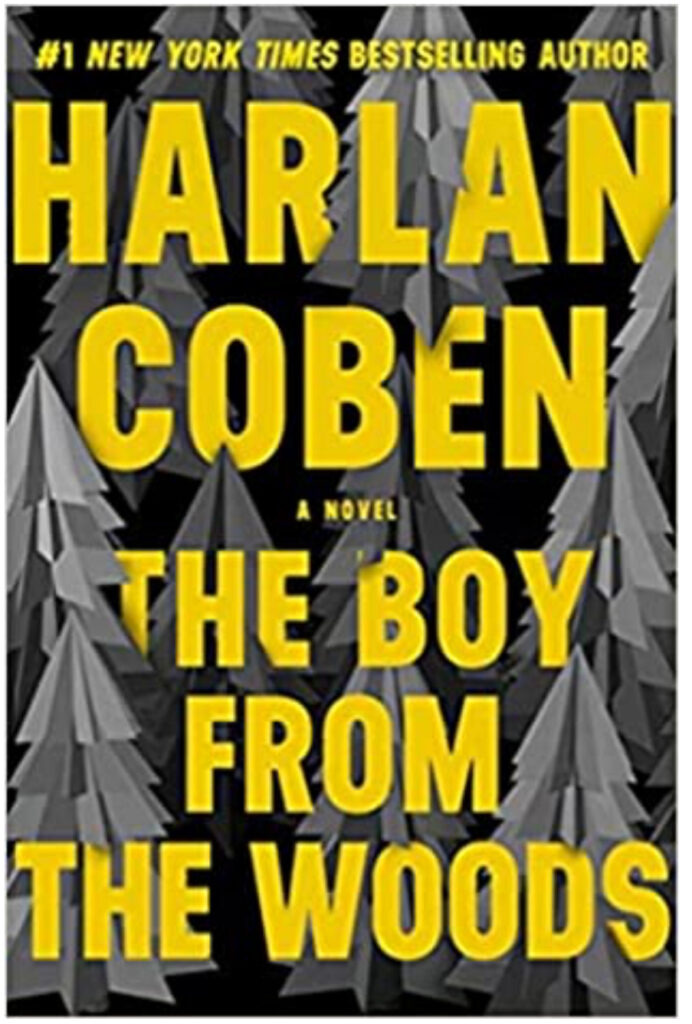
The Boy from the Woods

Harlan Coben is a master at crafting well-written, gripping thrillers. I have not read all of his books, but have read the last few, and have found them enjoyable and hard to put down (exactly what you want in a thriller). So, I was looking forward to The Boy from the Woods — so much so that I bought it in hardcover.

In The Boy from the Woods, a man with a mysterious past races to find a kidnapped girl. Sounds promising, right?

Well, maybe not. Surprisingly, this was a Did Not Finish for me. I gave it 100 pages, and then gave up. I just didn’t care about the characters enough to keep reading. Maybe it’s my current mood (I am, admittedly, very easily distracted these days), or maybe this is a rare miss for Coben. Either way, I moved on.

The Book of Lost Friends

The Book of Lost Friends, by Lisa Wingate

Thanks to Lisa Wingate, Random House-Ballantine, and Netgalley for providing me with a digital advance copy of The Book of Lost Friends. Wingate’s last novel, Before We Were Yours, was wildly popular, so I was anxious to read her new work.

The concept of this book — former slaves placing ads in newspapers in order to try to find their relatives — was new to me, and was very interesting, yet heartbreaking. This novel switches between two settings: Civil War-era Louisiana and more modern day (1980’s) Louisiana. Wingate does an excellent job describing both settings with meticulous, realistic detail.

While I enjoyed much of the description and the characters in this book (which are very well developed!) the story itself moved more slowly than I would’ve liked, and I found my interest lagging. Still, I would recommend this novel for those who enjoy historical fiction and for those who loved Wingate’s previous novel, Before We Were Yours.

Hour of the Assassin

Hour of the Assassin, by Matthew Quirk

When I was younger, the Cold War was at its peak and Robert Ludlum was all the rage. I was in love with spy thrillers. I think I read everything Ludlum wrote in the 1980’s, and then happily moved on to Tom Clancy’s ten pound doorstop novels. Red October, anyone? Over time, however, I’ve moved away from this genre, with only a few exceptions (I Am Pilgrim, as one example, or Daniel Silva’s amazing Gabriel Allon series, as another).

But our troubled times had me longing for escapist novels, so I picked Hour of the Assassin as one of my Book of the Month Club selections for March. In this novel, former Secret Service Agent Nick Averose is framed for a horrific murder, and must navigate through many layers of government corruption and intrigue in order to clear his name.

Unfortunately, I didn’t enjoy this novel. I found it choppy and superficial. I wanted to root for the main characters, but I never really felt emotionally engaged in the story. Having said that, I feel like I need to add this caveat: I’m not really familiar with the current state of this genre of novel. So, if you like spy novels/thrillers that are long on action and short on character development, you might really like this one. It just wasn’t for me.

Long Range

Long Range, by C.J. Box

This is the 20th novel in Box’s series featuring Joe Pickett, a Wyoming game warden. This series is reliably good, but as with other series, there have been a few books recently that veered off of Box’s successful formula and as a result weren’t quite as satisfying. Happily, Long Range is very good, and could easily be enjoyed as a stand-alone novel.

In Long Range, Pickett is caught up in several different mysteries: a bear attack outside of Jackson Hole, the murder by sniper of a local judge’s wife, and threats made against his friend Nate Romanoski. Most of the series’ usual, favorite characters appear in this novel, and the Wyoming locations are well-done and interesting.

This series is one of my favorites, in part because of the Wyoming setting but also because the game warden angle is different and interesting. Joe Pickett is a likable protagonist, who seems like a pretty regular guy. Box does such a good job with this series. He’s a good writer, but he also really knows Wyoming, and it shows. As always, I recommend that you start with book #1 in a series and move forward — BUT this series is very accessible so I think you could start with this book without too much trouble.

Recommended!